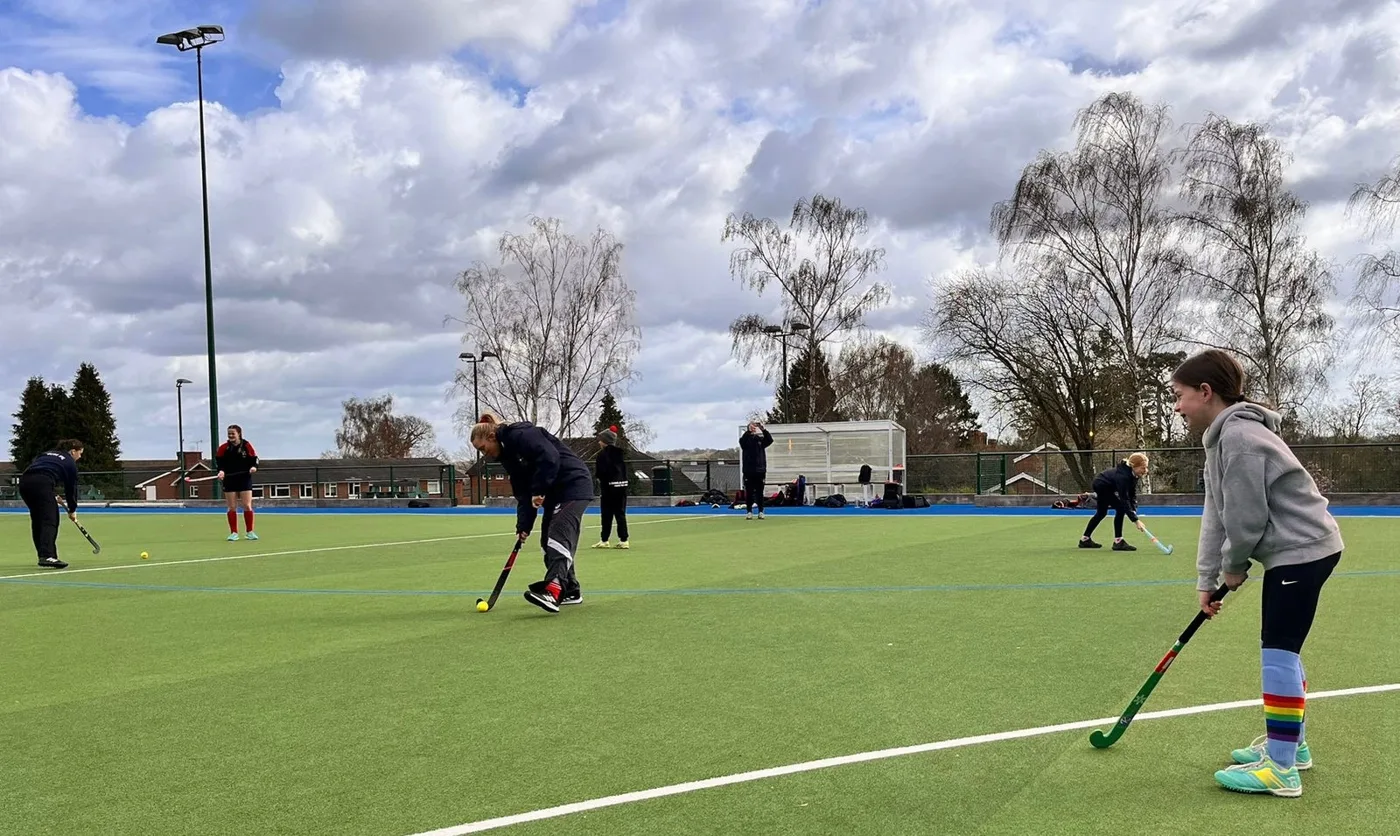

Crowborough's hockey club is one of five joining South East Hockey Futures in year two. The scheme reached 2,000 children in over 50 schools in its first year.
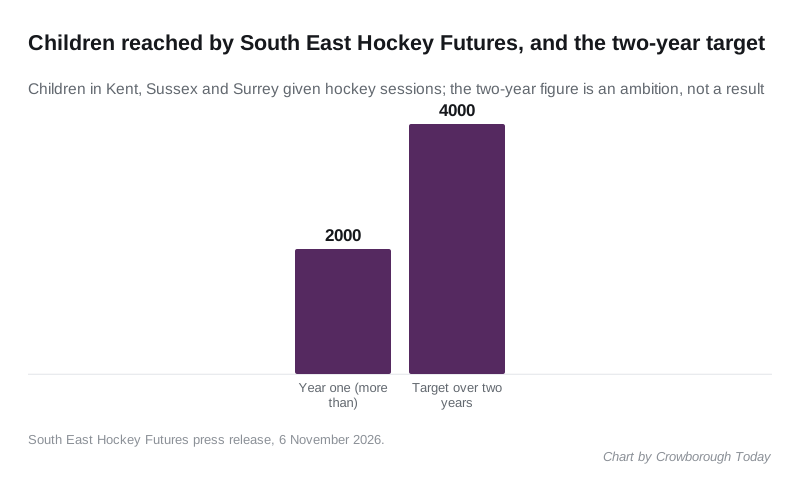
Crowborough’s hockey club is one of five clubs joining South East Hockey Futures in its second year, a programme that took hockey to more than 2,000 children in over 50 schools across Kent, Sussex and Surrey in its first. The scheme has now been backed for a second year by South East Hockey.
The other confirmed year two additions are Epsom, Gillingham Anchorians, Guildford and Tunbridge Wells, according to the programme’s own list of clubs. Crowborough is already part of the network’s sharing: the programme says balls have been passed between Eastbourne, Crowborough, Tunbridge Wells and Sittingbourne.
What the first year did
The programme funded 13 clubs out of 25 that applied, paying for them to take hockey into schools and to build routes from school sessions into club training. It says around 100 of the children it reached are now playing every week at their local club.
“More than 2,000 children across Kent, Sussex and Surrey picked up a hockey stick in year one of South East Hockey Futures, and around 100 are now playing every week at their local club,” the programme told Crowborough Today.
The 13 year one clubs were Bromley and Beckenham, Cliftonville, Deal, Eastbourne, Fleet & Ewshot, Gore Court, Gravesend Ladies, Horsham, Maidstone, Old Williamsonians, Sittingbourne, Southwick & South Downs and Sunbury & Walton Hawks.
The year two target
The aim for year two is a total across both years of 4,000 children in around 100 schools, working with around 28 clubs. The programme is clear that this is an ambition, not a result.
Beyond the five confirmed new clubs, it lists six more in discussions (Ashford in Kent, Chertsey Thames Valley, Crawley, Croydon Old Whitgiftians & Trinity, Kings Hill and Ashford in Middlesex), and five it has contacted without confirmation, including Hailsham.
The programme says it is also working with London Hockey Futures on a national Futures programme, having produced a blueprint that combines both regions’ methods. It adds that children from its clubs will get the chance to run ball patrol at top-level matches, including the London Euros.
Keeping girls playing, and reusing old sticks
Two new projects are in development.
Her Game will work with girls to find out what helps them feel “confident, comfortable and welcome in sport”, built around their experiences of kit, coaching, health and belonging. The aim is to help more girls keep playing through their teenage years.
RE:PLAY will collect unwanted hockey sticks, refurbish and re-grip them, and pass them on through the Futures network. “The ambition is simple: turn equipment sitting unused into something another child is excited to pick up and play with,” the programme says.
The kind of deal it wants more of has already happened once, before RE:PLAY existed. When a Tunbridge Wells school-uniform retailer got in touch with Tunbridge Wells Hockey Club while clearing surplus stock, the club bought 60 new sticks at a heavy discount, kept what it needed and passed the rest on to Epsom at the same price.
In a statement, South East Hockey Futures said:
“Getting a stick into a child’s hands is a start. Giving them a reason to come back is what matters next.
“Our clubs have already done brilliant things with the funding. Now we want to make it easier for them to do more together: sharing equipment, connecting schools and listening to girls about what helps them stay in sport.
“Hockey runs on people giving their time. We need to make that effort go further, so more children get the chance to play and more clubs can keep offering it.”
The value it claims
The programme cites Sport England’s social value model: on that basis, it says, every 100 children moved from being less active to active carry a potential wellbeing value of £500,000 a year. Sport England estimates that community sport generates £122.9 billion a year in social value across England.
How to get involved
South East Hockey Futures wants to hear from schools, clubs and businesses across the region, whether they can offer coaching links, surplus equipment, practical expertise or help with local sessions.
Contact the programme at hockeyfutures@southeast.hockey. There is more about how it works on South East Hockey’s programme page.
Have your say